
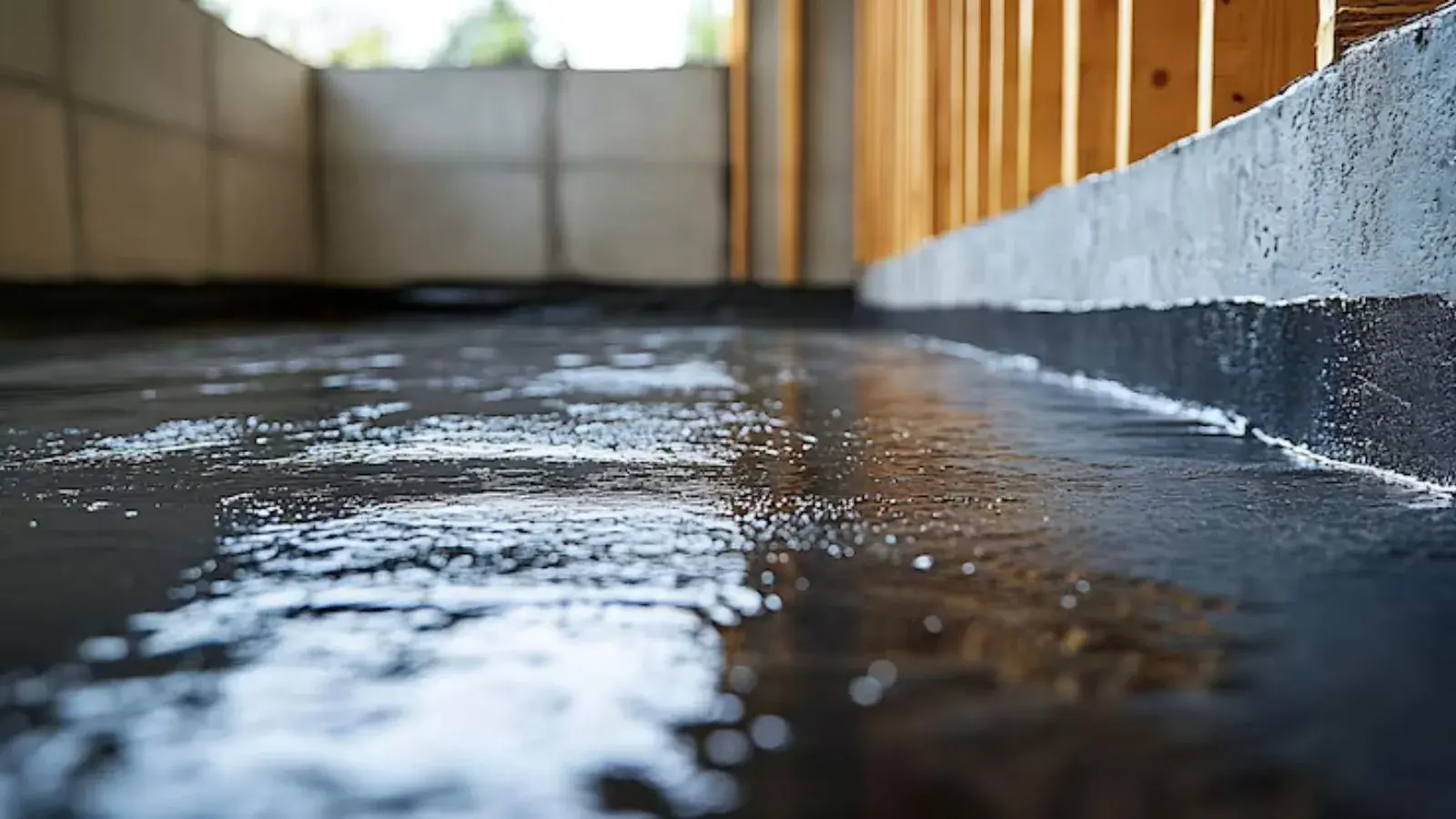
Test the slab before you pick a floor
Tape a one-foot square of clear plastic sheeting to the slab on all four sides and leave it for 24 to 48 hours. If the underside is damp or the concrete darkens, moisture is rising through the slab. A calcium chloride test kit gives a more precise reading.
A floor installed over a damp slab traps the moisture and can grow mold. If the test shows water, solve the water problem first with drainage, a sump or exterior grading, and then floor.
Flooring options compared
| Option | Water tolerance | Notes |
|---|---|---|
| Luxury vinyl plank | High | Waterproof planks, easy to dry, soft underfoot |
| Porcelain or ceramic tile | High | Durable, cold, needs a flat slab |
| Sealed concrete or epoxy | High | Simple, can show cracks |
| Raised subfloor tiles | High | Air gap lets the slab breathe |
| Rubber tiles | High | Good for gyms and play areas |
| Carpet or hardwood | Low | Not recommended in a damp basement |
Basement floods or seeps?
Call before you floor. We will look at drainage and the sump.
Vinyl plank, tile and epoxy in practice
Luxury vinyl plank is popular because it is waterproof, fairly comfortable and quick to install. Water that gets on top can be wiped up, but water that sits under it can still cause mold. Choose a product that lists waterproof construction and use the manufacturer's underlayment.
Porcelain tile stands up to repeated wetting and cleans easily, but it feels cold and needs a flat floor. Epoxy coatings seal the concrete, though a coating can peel if moisture rises through the slab, so test first.
Basements and flooding in South Plainfield
Hurricane Ida in September 2021 flooded homes in South Plainfield, and News12 reported one family home taking up to nine feet of water. If your basement has taken water, avoid porous materials and plan for easy drying.
After a flood, wet insulation, drywall and carpet should come out quickly. Allow the slab to dry fully before installing a new floor, and consider a sump pump with a backup for the next storm.
Source type: News report (News12)
Raised subfloors and drainage mats
Raised subfloor tiles have small feet that lift the floor off the slab. Any moisture that rises can evaporate through the gap, and a small leak does not flood the finished surface. They suit a basement with occasional dampness and work with carpet or vinyl on top.
A dimple mat under a floor works in a similar way. These systems do not replace drainage, but they help manage minor moisture and make cleanup easier.
Fix the cause before you floor
Water at the wall base
An interior drain and sump are the usual solution.
Window well leaks
Clear drains and add a cover.
Downspouts near the house
Extend them several feet away.
Poor grading
Regrade so soil slopes away from the foundation.
Our basement waterproofing page explains how a plumber approaches the problem. A sump failure is its own emergency, and the 24/7 line is open for it.
Planning a finished basement
Plan for outlets above the floor, a dehumidifier and access to shutoffs and cleanouts. Leave a few inches between a wall and the floor, or use water-resistant baseboards. A plumber can check the water heater, the sump and the drains before the walls close.
We serve Edison and Scotch Plains as well, so a basement project there can use the same team.
Budget and install tips
Vinyl plank is often the least costly option, tile costs more and an epoxy coating sits in between. Raised subfloor tiles add cost but give an air gap. Get a price for the whole project, including prep, leveling and any drainage work, and compare it to the cost of redoing a ruined floor.
Let materials acclimate in the basement before installing, leave an expansion gap and seal the edges. Keep the dehumidifier running during and after the install, and avoid placing rugs with rubber backing, which can trap moisture.
Walls, insulation and furniture
Flooring is only part of a damp-proof basement. Use moisture-resistant materials on the lower part of the walls and avoid fiberglass insulation against a concrete wall that can get wet. Keep furniture and storage a few inches off the floor and away from the walls.
Elevate electronics and keep documents in sealed containers on shelves. A dehumidifier with a continuous drain hose removes moisture without emptying a bucket, and a hygrometer shows when humidity creeps up.
Standards note
According to EPA guidance on mold, wet materials should be dried within 24 to 48 hours to prevent mold growth. That standard is the reason to remove soaked carpet and padding quickly after a flood.
Basement flooring questions
The planks are, but water under them can still cause mold. Seal the edges and fix moisture sources first.
Not in a basement that gets damp. If you do, use a raised subfloor and a moisture-resistant carpet.
Tape plastic sheeting to the slab for 24 to 48 hours and check for dampness underneath.
It depends on how it handles water. After storms like Hurricane Ida in 2021, many owners choose moisture-tolerant floors.
A sealer helps, but it does not stop water pressure from outside. Drainage is the lasting fix.