
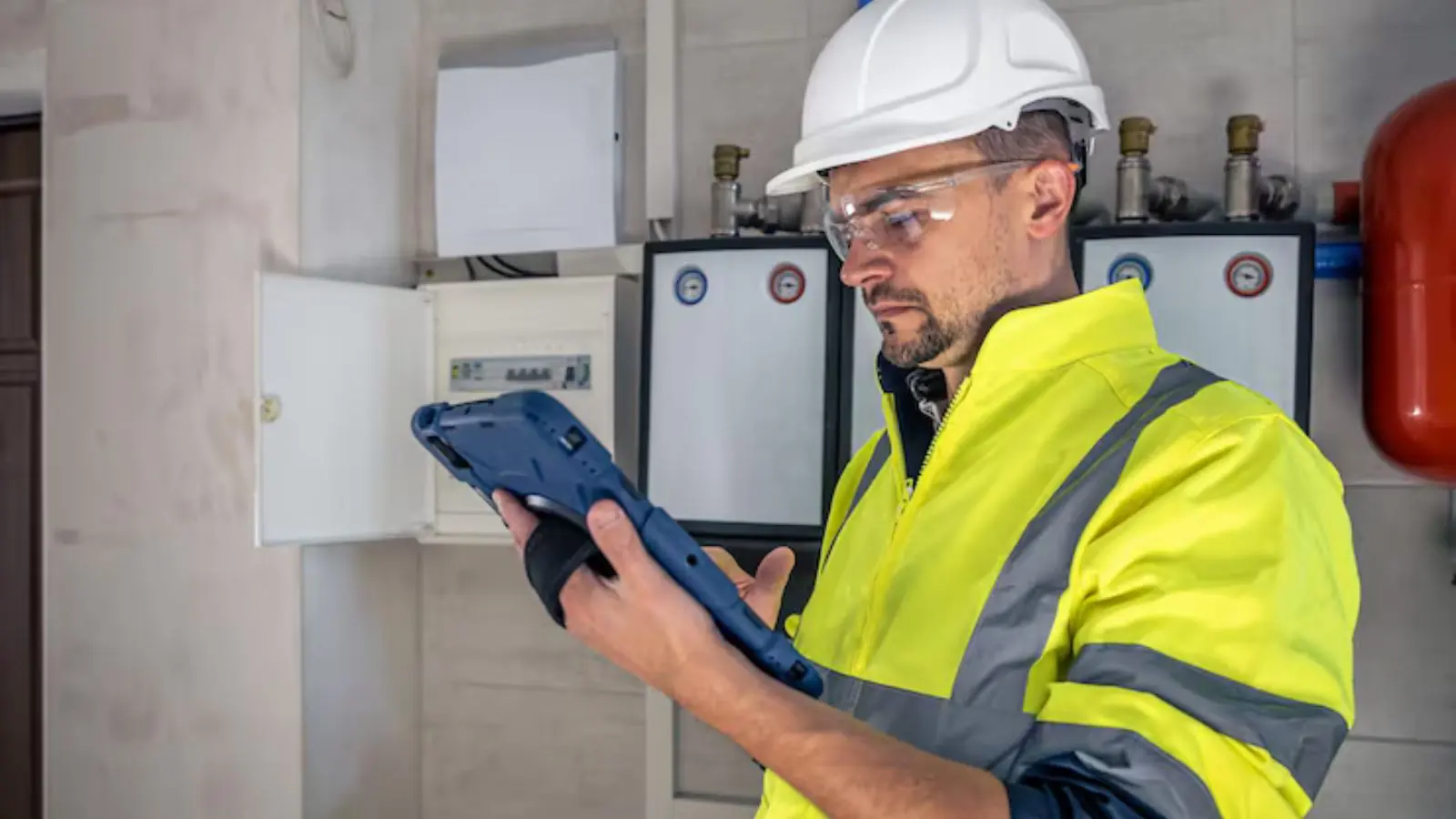
Why boiler calls are urgent
A boiler that is off in cold weather puts pipes at risk. Check that the thermostat is calling for heat, the switch on the boiler is on and the water pressure gauge reads in the normal range printed on the unit. If you smell gas, leave the house and call the gas utility or 911 from outside, and do not look for the cause yourself.
After that, call the 24/7 line. The dispatcher will ask what the boiler is doing and whether any water is leaking, and will book the earliest appointment available.
Common boiler faults
No heat or no hot water
A tripped safety, a failed circulator, a dead ignition or low water pressure can each cause it.
Banging or kettle noises
Scale or air in the system often causes these sounds.
Water around the boiler
A leaking valve, a failed relief valve or a cracked heat exchanger needs attention at once.
Pressure that keeps dropping
A leak in the loop or a failed expansion tank is a likely cause.
House getting cold?
Call the 24/7 line. A plumber can check the boiler and restore heat.
Repair or replace
Many boiler faults are repairable: circulator pumps, zone valves, ignition parts, relief valves and expansion tanks are routine replacements. A cracked heat exchanger or a boiler near the end of its life is a different story, and a plumber will tell you when repair cost approaches the price of a new unit.
Hot water from the boiler may also feed an indirect water heater. If that tank is failing, see our water heater repair page.
| Fault | Likely cause | Usual fix |
|---|---|---|
| No heat | Ignition, circulator or low pressure | Replace part or restore pressure |
| Noisy system | Air or scale | Bleed or flush |
| Leaking | Valve or relief valve | Replace valve |
| Low pressure | Leak or failed expansion tank | Find leak, replace tank |
Hard water and boiler health
Middlesex Water, which serves portions of South Plainfield, reports average hardness of 157 ppm in its 2025 report. Boilers use a closed loop that does not keep drawing new water, so scale matters less than in a water heater, but any fill water you add brings minerals along with it.
A yearly service check, which includes a safety test, keeps a boiler running and finds small problems before a cold night does.
Code and standards note
According to the CDC, you should install battery-operated or battery backup carbon monoxide detectors near every sleeping area and have heating systems and other fuel-burning appliances serviced by a qualified technician every year.
No-heat calls come from Plainfield and the other towns we serve, and a boiler that feeds an indirect tank may need water heater repair at the same visit.
Keeping a boiler running through a cold stretch
Bleed radiators or baseboards if some rooms stay cold while others are warm, since trapped air blocks flow. Keep furniture and curtains clear of radiators, and never store paint or other flammables near the boiler. A carbon monoxide alarm near the sleeping area is a sensible safeguard for any home with a fuel-burning appliance.
If the boiler stays off for more than a few hours in freezing weather, open cabinet doors under sinks on exterior walls and let a faucet drip. That protects the pipes while a plumber is on the way. Then see burst pipe repair for what to do if a pipe has already split.
What affects the price of boiler repair
Boiler pricing depends on the fault and the system.
Insurance rarely covers worn parts but may cover sudden damage from a failure. Want your real number? Call with the make and age of the boiler.
Want your real number? Call (732) 466-1098Boiler repair questions
Yes. The 24/7 line handles no-heat calls at any hour. Boilers go to the front of the queue in freezing weather.
Check the thermostat, the boiler switch, the pressure gauge and whether the pilot or ignition is lit. Do not open the boiler cabinet.
Yes, and the right response is to leave the house and call the gas utility or 911 from outside. Do not turn lights or appliances on or off.
Once a year before heating season is the usual advice, and it helps the unit last longer.
Yes. Steam systems have their own parts and quirks, and a plumber will tell you if the system needs a specialist.