
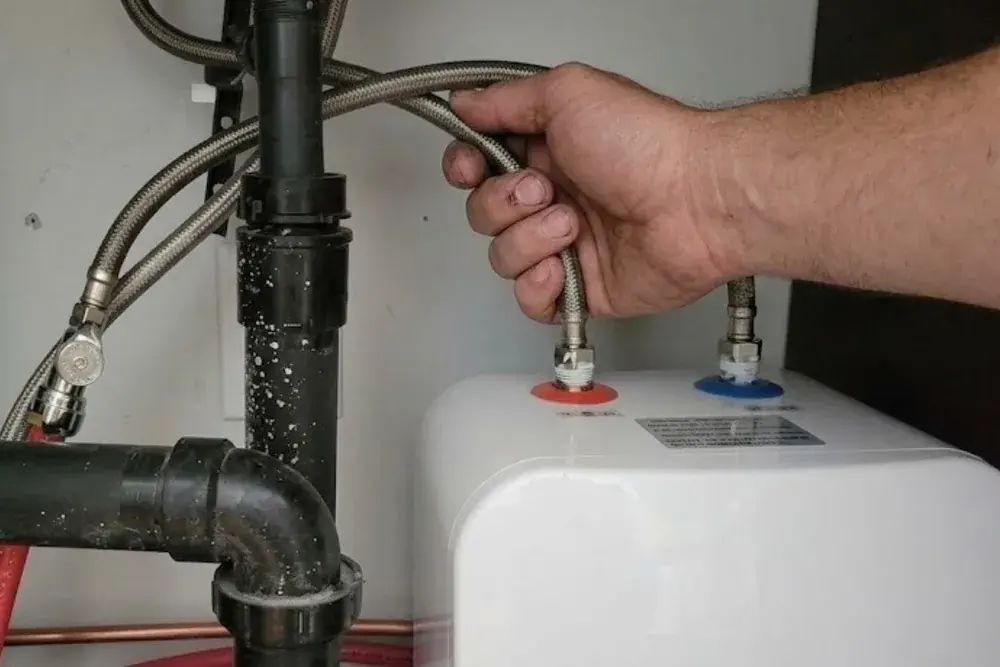
No hot water or a leak: what to do first
If water is pooling around the base, turn off the cold water supply to the heater and switch off the power or the gas control, then call the 24/7 line. A small drip at a fitting can be a quick repair, but water seeping from the tank body means the steel has failed. Do not try to patch the tank itself.
If the water is simply not hot, check that the breaker has not tripped or that the pilot is lit before you call. If neither explains it, a plumber can usually tell from your description whether you are looking at a failed element, a bad thermostat, a faulty gas valve or a sediment problem. Ask about timing when you call.
Water on the floor
A puddle can come from a loose fitting, a failed relief valve or the tank itself. Where it comes from decides repair or replace.
Lukewarm water that runs out fast
This often points to a failed lower element in an electric unit or heavy sediment in the tank.
Rumbling or popping from the tank
Scale and sediment trap water that boils under the layer and makes the noise.
Pilot will not stay lit
A worn thermocouple, a draft or a failing gas valve are the usual causes on gas units.
How a water heater gets diagnosed
The plumber checks power or gas supply first, then tests the thermostat, the heating elements or the burner and the safety controls. A relief valve that drips regularly and a rusty drain valve both tell part of the story. On tanks over about a decade old the question is whether another repair is worth it, and an honest answer includes the repair price next to the replacement price.
Hard water speeds up the wear. Middlesex Water, which serves portions of South Plainfield, reports average hardness of 157 ppm in its 2025 report, with a range from 90 to 308 ppm. Hardness at that level lays scale on elements and the tank floor, so a unit that is flushed regularly tends to last longer than one that never is.
Water heater out right now?
Call the 24/7 line. A plumber can tell you what to check while help is on the way.
Leaks, relief valves and the tank itself
Most leaks that come from a fitting, a drain valve or the temperature and pressure relief valve can be repaired without replacing the heater. A relief valve that drips constantly may be reacting to high water pressure or a missing expansion tank, so the fix is sometimes upstream of the heater. A leak from the tank wall or the bottom seam is different, and the plumber will tell you plainly when the unit has reached the end.
When a unit does need replacing, water heater replacement covers sizing, venting and the options, and a tankless unit is worth a look if the household is large.
| Fault | Likely cause | Usual action |
|---|---|---|
| No hot water, electric | Failed element or thermostat | Test and replace the part |
| No hot water, gas | Thermocouple, gas valve or pilot | Clean, replace or relight after a safety check |
| Drip from relief valve | High pressure or a worn valve | Replace the valve, check pressure and expansion tank |
| Leak from the tank shell | Corroded steel | Replace the heater |
| Rumbling noise | Sediment and scale | Flush, or replace if the tank is old |
Code and standards note
New Jersey's plumbing subcode, N.J.A.C. 5:23-3.15, adopts the National Standard Plumbing Code, 2021 edition, published by the International Association of Plumbing and Mechanical Officials. Under that standard, a tank heater needs a working temperature and pressure relief valve with a safe discharge line, so a good repair visit checks both.
Heater repairs are not limited to the borough. We also take these calls from Edison, and if the tank turns out to be done, the tankless option is worth pricing next to a new tank.
What affects the price of a water heater repair
Repair cost follows the part and the labor, and a plumber can name both once the unit is open.
Insurance coverage differs by policy. Sudden water damage from a failed heater is often covered while wear and tear is not, so check yours. Want your real number? Call and describe the symptoms.
Want your real number? Call (732) 466-1098Water heaters in South Plainfield basements
Many South Plainfield homes keep the water heater in a basement, which is also where heavy rain tends to show up. A heater sitting on a floor that floods can lose its burner or controls, and the 2021 Hurricane Ida flooding in the borough was a reminder of that. If your heater has ever been in standing water, ask for the gas valve and controls to be inspected, not just the tank.
Gas units should never be repaired by guesswork. If you smell gas, leave the house and call the gas utility or 911 first, then call us. That order matters more than any hot shower.
Water heater repair questions
Yes. The 24/7 line takes water heater calls at any hour, and a plumber is dispatched as soon as the schedule allows. Ask about timing when you call.
If the tank is leaking from the shell, replace it. If the unit is about ten years old or more and needs a costly part, replacement is often the smarter call. Younger heaters with a bad element, thermostat or valve are usually worth repairing, and you get both prices to compare.
Sediment and hardness scale collect on the bottom of the tank, and water trapped under that layer boils and pops. A flush often helps, and in South Plainfield where Middlesex Water reports hardness averaging 157 ppm, regular flushing is a sensible habit.
It depends on where the leak is. Fittings, drain valves and relief valves can be repaired or replaced. A leak from the tank body cannot be repaired, and the unit has to be replaced.
On some units, yes, if the manufacturer's instructions are on the label and you do not smell gas. If the pilot will not stay lit, or you smell gas at all, stop and call. A gas leak means leave the building and call the gas utility or 911 first.
The dispatcher will give you a realistic window when you call. Emergencies such as a leaking tank or no hot water in winter go to the front, and you can ask about timing when you call.