
When a leak cannot wait
Active water on a ceiling, water pouring from a wall or a floor that feels warm and damp is an emergency. Turn off the main water valve, switch off power to the wet area if you can reach the panel safely, and call the 24/7 line. A plumber will tell you what to do while help is on the way.
Slower signs matter too. A meter that keeps moving when every fixture is off, or a bill that has crept up with no change in habits, usually means water is escaping somewhere. Ask about timing when you call.
How a hidden leak is found
The plumber starts by isolating the system. With every fixture off, the meter shows whether water is moving, and shutting off the supply at the house tells whether the leak is before or after that valve. A pressure test then narrows the location to a section of pipe.
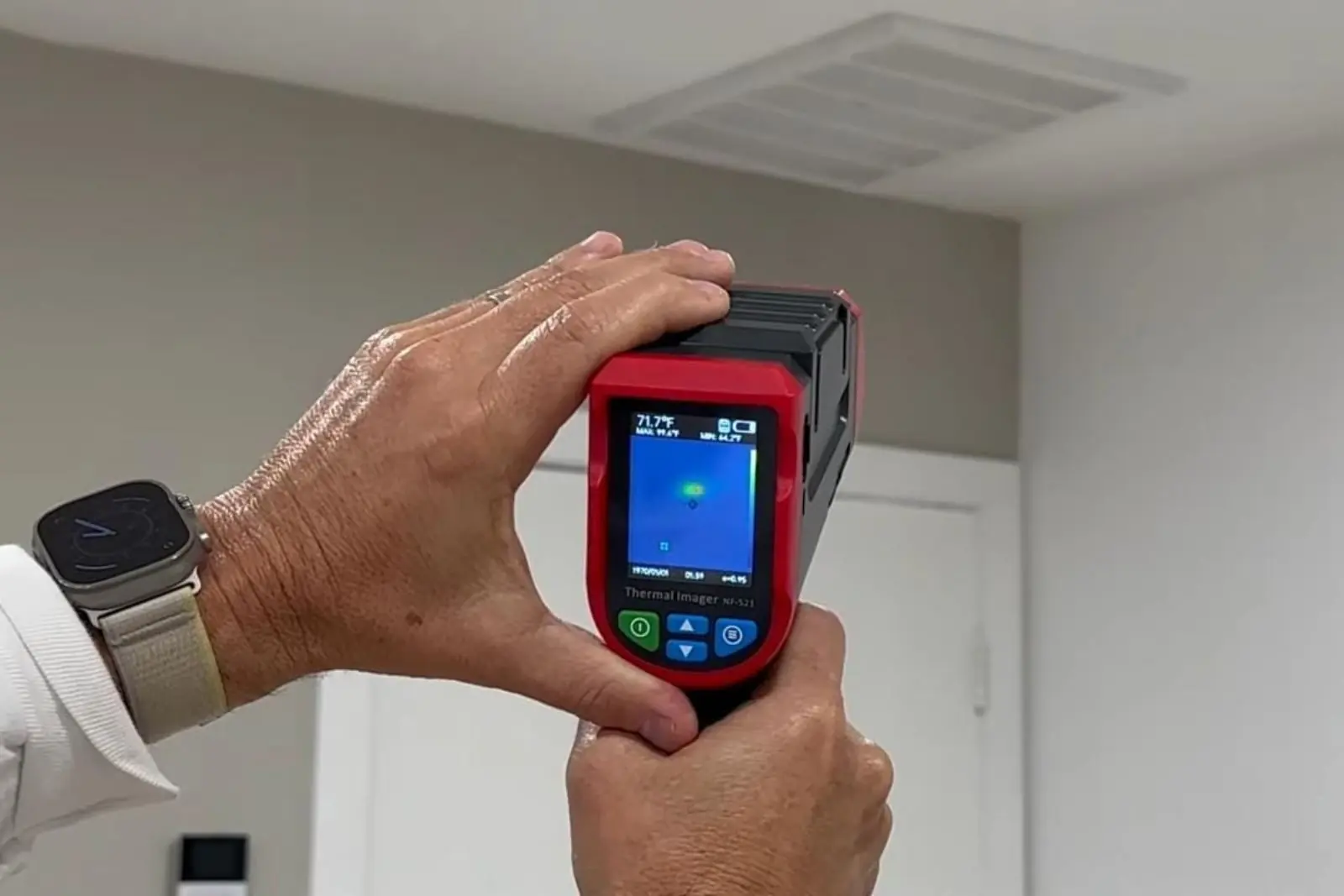
From there, acoustic equipment listens for the sound of water escaping, and thermal imaging shows temperature differences in walls and floors. Tracer gas and moisture meters fill in the rest. The goal is to mark the spot so repair means opening a small patch of drywall or floor, not a whole room.
Meter keeps moving
With every fixture off, a moving meter dial means water is leaving the pipes somewhere.
A bill that creeps up
A slow rise with no change in use often points to a slow leak or a running toilet.
Stain or soft spot on a ceiling or wall
Water travels, so the stain is rarely right under the leak.
Warm or damp floor
This can indicate a hot water line leaking under a slab or in a floor.
Water where it should not be?
Call the 24/7 line. A plumber can talk you through what to shut off.
Water meter and high water bill leaks
When a bill jumps, the first check is the simplest. Turn off every fixture, stop the washer and dishwasher, and watch the meter's leak indicator for a few minutes. If it moves, you have a leak. If it does not, the bill may reflect usage, and a toilet that runs intermittently is a common culprit.
A plumber can run the full test in one visit and tell you which side of the meter the water is leaving from. If the leak is between the meter and the house, that is a service line issue and the repair path is different from an in-house leak.
Ceilings, walls, slabs and crawlspaces
A ceiling or wall leak often comes from a supply line or a drain above, and thermal imaging usually pinpoints it without opening more than a patch. Leaks in a slab, where hot lines run under concrete, show up as warm floor spots or a running meter, and acoustic tools place the leak within a foot or two.
Under-house and crawlspace leaks are easier to reach but easy to miss, since the water can sit unseen for months. Buried service lines and irrigation lines leak outside the house, and a wet patch in the yard or around the meter box is the signal. A pool or spa leak is a separate test with its own methods and is worth a call if you have one.
| Symptom | Likely cause | First test |
|---|---|---|
| Meter moves with everything off | Leak in house or service line | Isolate at the main valve |
| Ceiling stain | Supply or drain line above | Thermal scan and moisture meter |
| Warm patch on floor | Hot line under slab | Acoustic and thermal locating |
| Wet yard near meter | Service line or irrigation | Pressure test and acoustic |
| Bill creeping up | Slow leak or running toilet | Meter test and fixture check |
Code and standards note
According to the EPA WaterSense program, household leaks waste more than 9,300 gallons of water every year on average, and nine percent of homes have leaks that waste 50 gallons or more per day. That is why a meter test is worth doing even when nothing looks wrong.
Leak detection visits are also booked from Piscataway, and a leak that turns out to be a split supply line becomes a burst pipe repair job in the same visit.
What affects the price of leak detection
Detection is priced by the time and tools the search needs.
Insurance often covers sudden water damage but not a slow leak or the pipe itself, and some policies exclude slab leaks. Want your real number? Call and describe the symptoms.
Want your real number? Call (732) 466-1098Leaks and South Plainfield homes
Older houses in the borough often combine copper, galvanized and plastic pipe from different eras, and the joints between them are common places for a slow leak. Middlesex Water, which serves portions of South Plainfield, reports average hardness of 157 ppm, and hard water scale can roughen and wear the inside of older lines.
If a leak turns out to be a failing line, the choices are a spot repair or a longer replacement, and repiping is worth reading about when several leaks show up in the same house. After heavy rain, check that the wet spot is not groundwater seeping in. A damp basement wall after a storm is a waterproofing question, not a leak.
Leak detection questions
Yes. The 24/7 line is open at all hours. Turn off the main water valve first, then call, and a plumber will tell you what else to do while help is on the way.
Turn off every fixture and appliance that uses water, then watch the meter's leak indicator for a few minutes. If it moves, you likely have a leak. A toilet that runs on its own is the most common false alarm.
Not usually. Thermal imaging, acoustic listening and moisture meters locate most leaks first, so any opening is a small patch rather than a large demolition.
Yes. Acoustic and thermal tools can place a slab leak within a foot or two, so the access hole is small.
A plumber can tell by isolating the house. Generally, the line from the meter to the house is the homeowner's responsibility, but ask your water utility to confirm for your address.
Detection finds and marks the leak. Repair fixes it. They are priced separately, so you can decide after the leak is found.