
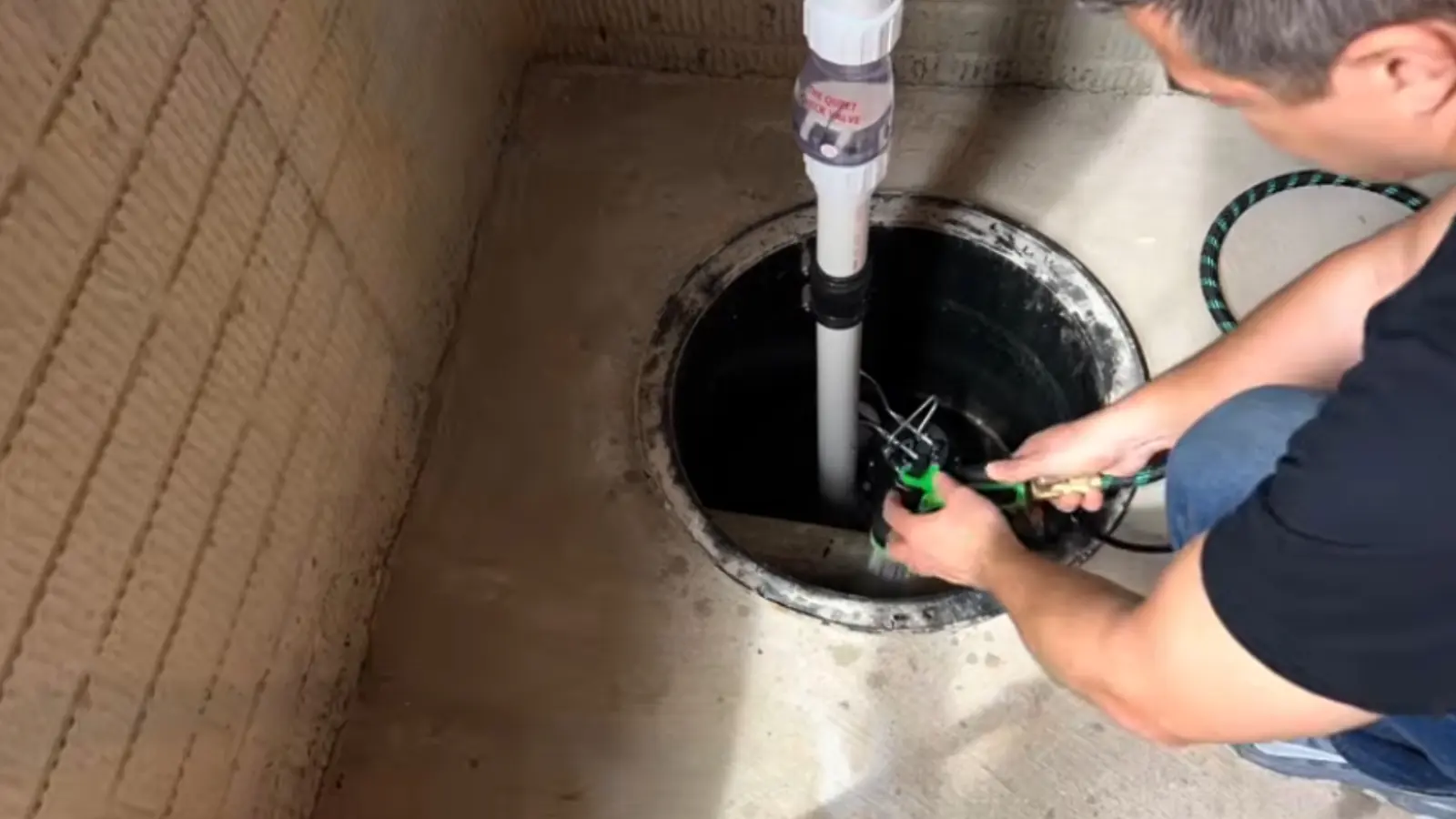
How a water-powered backup pump works
The unit connects to a municipal water line and a discharge line. When the pit fills past the main pump's level, a float opens a valve. Pressurized water flows through a venturi inside the unit, which creates suction and draws pit water up and out with it.
It does not use electricity, so it keeps working in an outage. It does use water, and typically more water than it moves out of the pit. That is the main trade-off, and it matters if you have a meter or a well.
| Factor | Water-powered | Battery |
|---|---|---|
| Power source | City water pressure | 12 volt battery |
| Runtime | As long as water pressure lasts | Limited by battery charge |
| Maintenance | Low, test now and then | Test battery, replace every few years |
| Water use | Uses municipal water | None |
| Works on a well | No | Yes |
| Capacity | Depends on water pressure | Depends on the pump and the battery |
Where it makes sense
A water-powered pump suits a house on municipal water with decent pressure, a risk of long outages and an owner who wants a low-maintenance backup. It does not suit a house on well water, since it needs the pressure of a city supply. Low pressure reduces its capacity.
Many homeowners pair a battery backup with the main pump and keep the water-powered unit as a second layer. Ask a plumber which setup fits the size of your pit and the volume of water you see in a storm.
Want a backup that works in an outage?
Call and ask about backup options for your sump.
Rules, water supply and flooding history in South Plainfield
Hurricane Ida in September 2021 flooded homes in South Plainfield, and News12 reported one family home taking up to nine feet of water. Storms like that often come with power cuts, which is when a backup matters most.
Some water suppliers and municipalities set rules on water-powered pumps or require a backflow device on the supply line. Ask the South Plainfield construction office and your water utility before installing one. Middlesex Water serves portions of the borough.
Source type: News report (News12) and local utility and code guidance
Installation details
A plumber connects the unit to a cold water line with a shutoff, installs a backflow preventer if required and runs a discharge line. The unit mounts above the pit, and the discharge should send water away from the foundation, not back toward the house.
Test it once a year by raising the main pump float or filling the pit. Check the valve and the hoses and look for leaks. A unit that sits idle for years can stick.
Limits and cautions
Water use
A running unit can use a lot of water, which shows on your bill.
Pressure dependence
Low municipal pressure reduces its capacity.
Rules
Some places restrict or regulate its use.
Not for wells
It needs pressurized municipal water.
If the main problem is a pump that is too small or a pit that overflows in every storm, fix that first. A backup does not fix an undersized system. For repeat seepage, see basement waterproofing.
Cost and next steps
The price depends on the unit, the supply connection and the discharge run. A plumber should give you a clear price including any backflow device. We also serve Piscataway and Plainfield, where basements see similar storms.
Testing and maintaining the backup
Test the backup at least once a year, and before the wet season. Fill the pit or lift the main pump float until the backup starts, then watch the discharge. Check the supply valve and the hoses for leaks. If the unit has sat idle, run it for a few minutes to clear any stuck parts.
Keep the pit clean. Debris can jam a float or block the intake. Write the test date on the unit so you remember. A backup that works in a test is worth far more than one you assume will work.
Choosing between backup types
A battery backup is simple, quiet and independent of water pressure, but it needs a battery that is tested and replaced on a schedule. A water-powered unit needs little upkeep but depends on city water. Some homeowners install both, so one covers a long outage and the other covers a short one.
Ask a plumber to size the system to your pit and the water you see in a storm. A backup that cannot keep up with the inflow gives false comfort, so the numbers matter more than the label.
Standards note
Plumbing code standards require backflow protection where a device connects to the drinking water supply, which is why a water-powered backup often needs a backflow preventer. Ask a licensed plumber what applies to your supply line.
Water-powered backup questions
Yes, as long as water pressure holds. It needs no electricity.
It uses municipal water, typically more than it pumps out. Check your bill and your supplier's rules.
Generally not. It needs pressurized municipal water.
Rules can vary. Ask the South Plainfield construction office and your water utility before installing one.
Yes. The backup is a second layer, not a replacement for a properly sized main pump.