
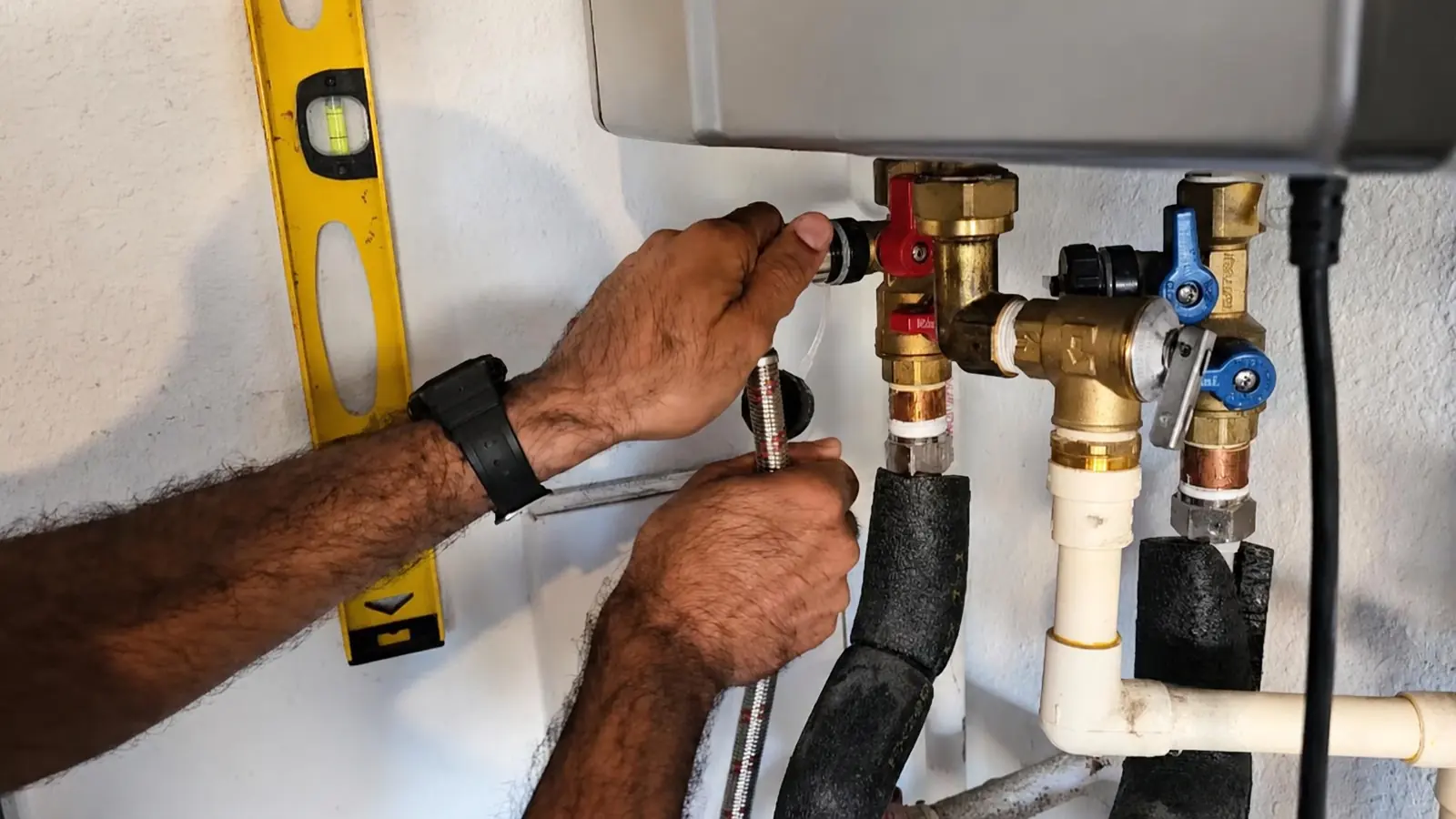
Why tankless units still make you wait
A tankless heater makes hot water on demand, but the hot water still has to travel through the pipes to your tap. The cold water sitting in those pipes comes out first. In a long run to a far bathroom, you can wait a minute or more and run several gallons down the drain.
A recirculation pump keeps hot water moving, so it is waiting near the tap when you turn it on. That reduces the wait and the waste, at the cost of extra energy to keep the water warm.
Two ways to install a recirculation system
Dedicated return line
A separate pipe returns water from the farthest fixture to the heater.
Crossover valve
A valve under the farthest sink lets the hot line feed the cold line to return water.
Pump at the heater or fixture
Some units mount at the heater, and some at the far sink.
Control
A timer, a thermostat or a push button decides when the pump runs.
A dedicated return line is the most efficient but needs new pipe, which is easiest during a remodel. A crossover valve is easier to retrofit but warms the cold line slightly, so the first bit of cold water at that sink is tepid.
| Option | Upside | Downside |
|---|---|---|
| Dedicated return line | Best performance | Needs new pipe in the walls |
| Crossover valve | Easy retrofit | Cold line runs warm |
| Timer control | Simple, saves energy | May not match your schedule |
| Push button or sensor | Runs only when needed | Slight delay |
| Always on | Instant hot water | Highest energy use |
Want faster hot water?
Call and ask a plumber about the best option for your layout.
Why distance matters in older South Plainfield layouts
South Plainfield includes homes built across many decades, with additions and renovations that stretch the pipe run from the heater to a far bathroom. The longer the pipe, the longer the wait for hot water.
Ask a plumber to measure the distance from the heater to your farthest fixture. If the wait is more than about thirty seconds, a pump may make a difference you can feel.
Source type: Plumbing practice and borough housing context
Tankless-specific considerations
Some tankless heaters have a built-in recirculation pump or accept an add-on kit. Others do not support recirculation, or require a small buffer tank to prevent the unit from cycling on and off. A plumber checks the manual and the model before recommending a setup.
Running the heater more often also means more scale. Middlesex Water, which serves portions of South Plainfield, reported average hardness of 157 ppm in its 2025 report, so a recirculation system makes a regular flush even more important.
Energy use and water savings
A pump on a timer or a sensor adds a modest amount to the electric bill and saves water that would otherwise go down the drain. The saving depends on how many times a day you wait. Many households find the convenience worth it. If you value the water savings more than speed, a push button is a good middle option.
The pipe heat loss is the real cost. Insulating the hot water lines reduces heat loss and makes any recirculation system more efficient. A plumber can insulate accessible lines while installing the pump.
Cost, permits and who to call
Costs depend on the pump, the control and the pipe work. A crossover kit is a modest job. A dedicated return line in finished walls costs more. Ask for a clear price and a description of what the install involves. Permit rules vary, so ask the South Plainfield construction office.
If you are shopping for a new unit at the same time, see water heater installation. We also serve Edison and Plainfield.
How to decide if it is worth it
Time how long you wait for hot water at your farthest fixture. Catch the water in a bucket while you wait and note how many gallons you waste. If it is a minute and a few gallons several times a day, a pump may pay off in water and comfort.
If the wait is short or you rarely use the far bathroom, you may not notice the difference. A pump on a push button costs little to run and gives you hot water when you need it, which is often the best fit for a household with an irregular schedule.
Standards note
According to U.S. Department of Energy guidelines, insulating hot water pipes cuts heat loss and can raise water temperature at the tap. It is a standard step that makes any recirculation system work better.
Recirculation pump questions
Not always. Some units have built-in support, and others need a kit or a buffer tank. Check the manual or ask a plumber.
It uses some electricity and loses some heat in the pipes. A timer or sensor keeps the cost modest.
Often yes, with a crossover valve at the farthest sink. It is the usual retrofit.
Probably not. The wait is short in a compact house, and a pump saves less.
A properly installed pump should not. An incorrect setup can cause cycling or scale, so use a plumber.