
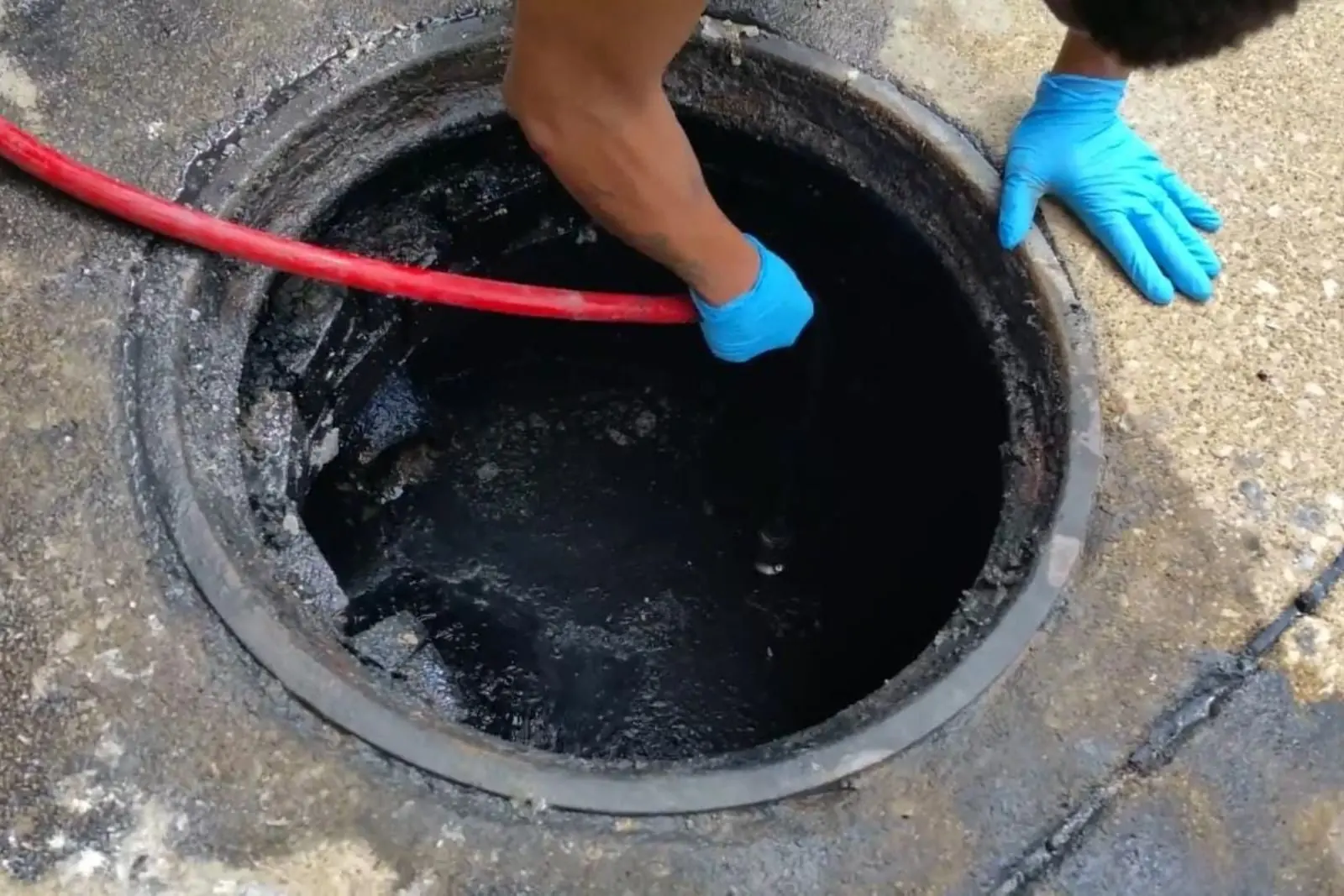
How hydro jetting works on a sewer line
A hydro jetter is a pump on a truck or trailer that feeds a high-pressure hose into the sewer cleanout. A nozzle at the end shoots water forward to break up the blockage and backward to pull the hose along while scouring the pipe wall. The debris flows downstream with the water.
Unlike a cable, which cuts a narrow hole through a clog, a jetter cleans the full inner surface of the pipe. That removes the grease film and scale that let new clogs form, which is why a jetted line often stays clear for longer.
When jetting makes sense
Grease buildup
Kitchen waste leaves a hardened coat along the pipe wall that cables do not remove.
Scale in cast iron
Old iron pipe narrows as scale builds, and jetting widens the opening.
Light roots
Hair-like roots can be cut and flushed from a joint.
Repeat clogs
A line that clogs every few months may need a full cleaning instead of another cable visit.
When jetting is the wrong choice
Jetting cannot fix a collapsed pipe, a bellied section that holds water or a large root mass that has broken the wall. Water pressure on a cracked pipe can also make it worse. That is why a plumber should run a camera first when the line is old or the problem returns often.
If the camera shows a break, you need a repair, not a cleaning. Our sewer camera inspection page explains what the camera finds, and sewer line repair covers the options when the pipe has failed.
| Situation | Best first tool | Why |
|---|---|---|
| First clog in a healthy line | Cable | Quick and low cost |
| Clog returns within weeks | Jetting | Cleans the wall, not just a hole |
| Roots at a joint | Cutting head, then camera | Find out how bad the opening is |
| Old cast iron with scale | Camera, then jetting | Check wall thickness first |
| Broken or collapsed pipe | Repair | Cleaning does not fix structural damage |
Not sure what your line needs?
Call and ask about a camera look and jetting in one visit.
Why South Plainfield basements make sewer problems urgent
South Plainfield was incorporated in 1926 and has been built up over the decades since, so sewer laterals under its streets range widely in age and material. Hurricane Ida in September 2021 flooded homes in the borough, and News12 reported one family home taking up to nine feet of water.
A sewer backup after a storm is a different problem from a clogged line, because it can come from the municipal system. A plumber can tell whether the blockage is on your side by checking the cleanout and running a camera.
Source type: News report (News12) and borough incorporation record
What to ask a plumber before jetting
Ask whether a camera will go in first, how the plumber will protect an old pipe and where the access point is. A cleanout makes the job faster, while pulling a toilet is a last resort. Ask also whether the price covers the camera or whether it is separate, and what happens if the camera finds a break.
Ask how the debris will be handled. A good plumber flushes the line until the water runs clear and checks that nothing is left to catch downstream. For a restaurant or shop with a grease line, ask about a recurring schedule so a clog does not close the business.
How often should a line be jetted?
There is no single answer. A residential line in good shape may need nothing for years. A line with heavy grease or roots may need a cleaning every one to two years. A commercial kitchen line may need quarterly service. The camera shows how fast the buildup returns, and a plumber can set a schedule from that.
Between cleanings, avoid pouring grease down the drain, do not flush wipes labeled flushable and keep trees and shrubs away from the lateral. If you live near Edison or Plainfield and share a line with a neighbor, mention that when you call.
Preparing for a jetting visit
Clear the area around the cleanout and tell the plumber where it is. Move cars and stored items from the driveway or basement path. Know where your main water shutoff is, and keep children and pets away from the work area. If you have had a backup, avoid running water until the plumber arrives.
Expect some noise and a lot of water on the ground near the cleanout. A good crew lays down protection, controls the hose and cleans up. Ask for the camera footage afterward, since it shows what was found and what the line looks like now.
Standards note
Plumbing code standards treat a cleanout as a basic part of drain design, which is what lets a jetting hose reach the line. Work on a sewer line must be done by a licensed plumber under N.J.S.A. 45:14C-1.
Hydro jetting questions
It is safe on sound pipe. A camera first confirms there are no cracks or collapsed sections that the pressure could worsen.
It cuts and flushes light roots. A heavy mass may need cutting first, and the joint it entered may still need repair.
A typical home line often takes one to two hours including the camera. Heavy buildup or a hard-to-reach cleanout takes longer.
It clears debris on your side of the line. If the backup came from the municipal system, a plumber can confirm that and advise on a backwater valve.
Not usually if the wall is sound. A camera look first shows whether the pipe is thin or cracked.