
Start with the water meter
The meter is the most honest tool you own. Turn off every faucet, the washer, the dishwasher and the ice maker. Do not flush any toilets. Find the meter, usually in the basement or a utility area, and look for a small triangle or dial that spins when water flows.
If the triangle or the lowest dial turns with everything off, water is escaping. Note the reading, wait fifteen minutes with no water use and read it again. Any change is a leak. A faster spin means a bigger leak.
Shut everything off
No faucets, toilets, washers or the ice maker.
Read the meter
Write down the number and the dial position.
Wait fifteen minutes
Do not run any water.
Read it again
Any change means water is leaving the pipes.
Is the leak inside or outside the house?
Close the main shutoff valve inside the house and watch the meter. If it keeps moving, the leak is between the meter and the shutoff, so on the service line. If it stops, the leak is inside the house. That one test tells you whether you have a plumbing problem or a service line problem.
Check your toilets with dye
Toilets are the most common source of hidden leaks. Put a few drops of food coloring in the tank and do not flush. If color appears in the bowl within fifteen minutes, the flapper is leaking. A toilet can lose many gallons a day this way without any sound.
Meter moves with everything off?
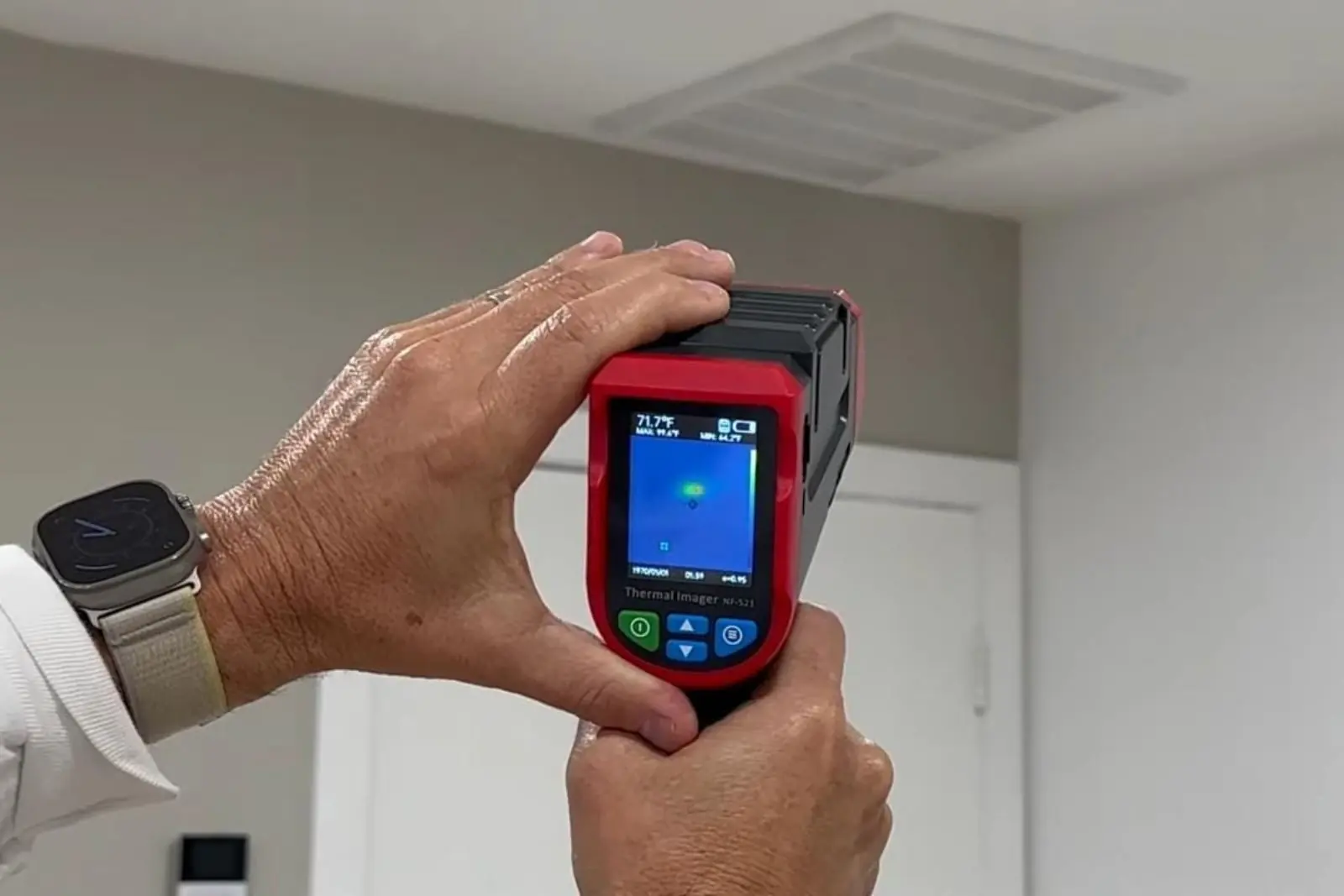
Call to find the leak with thermal and acoustic tools, with minimal opening of walls.
Look for signs around the house
Damp cabinet floors
Check under every sink for moisture and swollen wood.
Stained ceilings
Water travels, so the stain may not be under the leak.
Warm floor spots
This can mean a hot water line leaking under a slab.
Musty smell
Hidden moisture often smells before it shows.
Check the water heater, the washing machine hoses and the laundry sink. Look at outside faucets and any irrigation system. Walk the yard after a dry spell and look for a patch of green grass or damp soil in line with the main.
What a water bill tells you in South Plainfield
Middlesex Water serves portions of South Plainfield, and your bill shows usage in gallons or cubic feet. Compare it to the same month last year. A rise with no change in habits is a clue.
Ask your utility how it reads the meter and whether it offers leak alerts. If your address is served by a different water company, the same advice applies, and the bill is where to find the supplier's name and contact.
Source type: Utility billing practice (Middlesex Water)
What the free checks cannot tell you
Free checks tell you whether you have a leak and roughly where. They do not tell you the exact location. A leak in a wall, under a slab or in a buried line is only pinpointed with thermal imaging, acoustic equipment or a pressure test.
The advantage of knowing it is a leak first is that you can describe it clearly, and a plumber can skip the early steps. Mention your meter findings and the toilet test results when you call.
| Check | What it tells you | Do you need a pro? |
|---|---|---|
| Meter test | Whether a leak exists | No, but the next step may need one |
| Main shutoff test | Inside vs service line | Maybe, for a service line leak |
| Toilet dye test | Flapper leak | No, a flapper is a simple part |
| Visual check | Obvious wet spots | Maybe, if you find water |
| Moving meter, nothing visible | Hidden leak | Yes, leak detection |
What to do once you find a leak
If water is actively flowing, shut off the main valve. For a running toilet, replace the flapper. For a leaking supply line, shut the fixture valve and call. If the leak is hidden, take notes and photos and call a plumber. The earlier you find a leak, the less structural damage and the smaller the bill.
We serve Edison and Plainfield too, and the 24/7 line handles emergencies. For a pipe that has already split, see burst pipe repair.
Using your bill and your meter together
Your bill shows a trend, and the meter shows the present. A bill that rose with no change in habits tells you to look. A meter test tells you whether water is moving right now. Use both. If the bill is higher but the meter is still, the cause may be seasonal use, such as filling a pool or watering a lawn.
Keep a short log of readings. Write the date and the meter number each week for a month. A steady increase that does not match your use is the clearest sign of a slow leak, and the log gives a plumber a head start.
Standards note
According to the EPA WaterSense program, household leaks waste more than 9,300 gallons of water every year on average, and nine percent of homes have leaks that waste 50 gallons or more per day. A meter test takes fifteen minutes and is worth doing.
Leak check questions
A small steady leak can waste thousands of gallons over a month, which shows on the bill and can damage wood and drywall.
It is a reliable indicator. If the dial moves with everything off, there is a leak. A tiny leak may take longer to show, so wait thirty minutes if needed.
Warm spots on the floor and a moving meter hint at one, but pinpointing it takes acoustic and thermal tools.
Yes, ask the utility how the reading was taken and whether it offers a leak check. The bill shows who your supplier is.
Larger ones do. Very slow leaks may be hard to see, so compare readings over several months.